
Too Long; Didn't Read
- The interlock — where your two door panels meet in the middle — is the most common source of a sliding door draft that weatherstripping alone won't fix.
- If your roller height is off even slightly, the door panel sits too low and the interlock loses contact with the fixed panel, creating an air gap the width of a pencil.
- Raising the door panel using the roller adjustment screws costs nothing and takes about 15 minutes — it's the first thing to try before replacing any parts.
- If adjustment doesn't close the gap, the pile (brush) weatherstrip inside the interlock has compressed or worn away and needs replacing — a $30–$60 DIY repair or $80–$150 with a technician.
- A door that drafts at the interlock loses heat faster than one with a broken seal in a window pane — especially in a Toronto winter where temperatures swing 25°C in a single week.
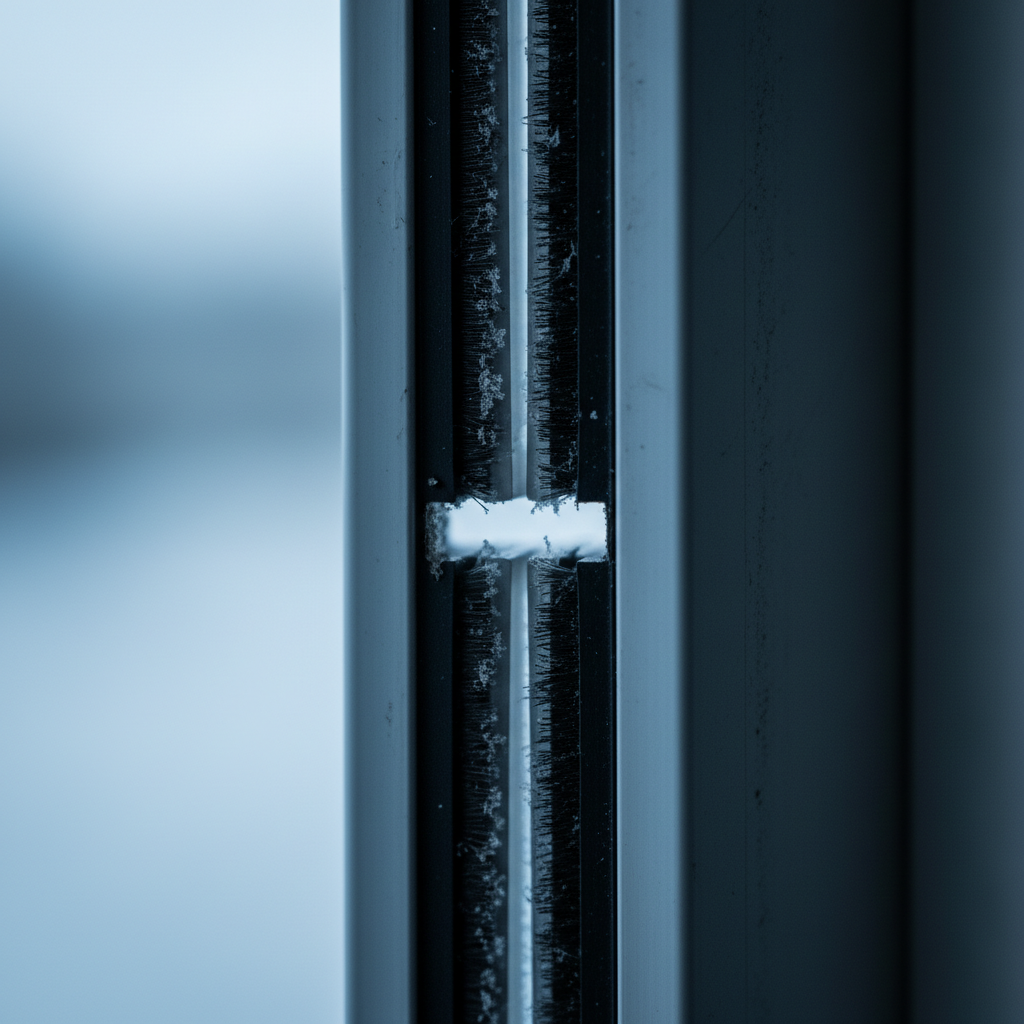
The short answer: A cold draft coming through your sliding door is usually not a perimeter seal problem. It's an interlock problem — meaning the vertical seam where your sliding panel meets the fixed panel has lost contact. Before you buy weatherstripping or call for a quote, spend 15 minutes adjusting your roller height. A door that's dropped even 3–4 mm sits too low to engage the interlock properly, and that gap is where your furnace's work is going to waste.
What's actually happening at the centre of your door
Most people look in the wrong place when their sliding door lets in cold air.
They check the perimeter seal around the frame. They press foam tape into the sill channel. They vacuum the track, spray silicone, do all the right maintenance things — and the draft is still there. Coming from the middle of the door. Right where the two panels meet.
That seam has a name: the interlock.
Interlock — the vertical channel formed where the meeting rail of the sliding panel closes against the meeting rail of the fixed panel. It contains a pile weatherstrip (a brush-like seal made of densely packed fibres) that compresses against the opposite panel to create a continuous barrier from top of door to bottom.
When it works, you don't know it exists. When it doesn't, you feel it in February.
I've done enough window and door calls across the GTA to say this confidently: a drafty interlock is behind more than half the "my sliding door is leaking heat" calls we get. And in most cases, the fix starts with a screwdriver and fifteen minutes — not a parts order.
Why the interlock loses its seal
There are three things that break interlock engagement. Understanding which one you're dealing with changes your repair strategy entirely.
1. Roller drop (most common)
A sliding patio door rides on two roller assemblies set into the bottom rail — one at each end. Those rollers have height adjustment screws, usually accessible through small holes at the bottom face of the door panel.
Over time, rollers wear down, their height adjustment screws back off from vibration, or the roller housings compress slightly under the door's weight. The door sinks. Even 3–4 mm of drop changes the geometry enough that the sliding panel's meeting rail no longer sits at the same height as the fixed panel's interlock channel. The two components that were designed to mate are now talking past each other.
"A sliding patio door that has dropped 4 mm from roller wear can create an air gap at the interlock equivalent to leaving a 5 mm slot open across the full height of the door — a straight channel for cold air that no amount of weatherstrip replacement will fix until the roller height is corrected."
The fix here is not new weatherstripping. It's raising the door.
2. Worn pile weatherstrip
The interlock's seal is not a rubber gasket. It's pile weatherstrip — a strip of dense, flexible fibres (similar in feel to velvet or a fine brush) set into a narrow aluminum kerf channel inside the interlock. Pile compresses easily to create a seal without fighting the door's sliding motion.
Pile wears out. The fibres flatten, compress permanently, or fall out of the kerf entirely. When that happens, even a perfectly-aligned door will have a gap at the interlock because the seal itself has nothing left to give.
Toronto's climate is hard on pile weatherstrip specifically. Freeze-thaw cycling compresses and releases the fibres repeatedly. Winter grit gets packed into the pile and abrades it. High-UV summers dry out the backing strips. On a door that's 10–15 years old, the pile is probably due for replacement regardless of how well the rollers are set.
3. Frame or panel racking
Less common but worth knowing: if the door frame has shifted — foundation settling in an older Etobicoke bungalow, for example, or seasonal wood movement in a Leslieville semi — the frame itself may no longer be square. When that happens, the meeting rails are no longer parallel, and the interlock gap opens at the top or bottom while staying tight in the middle, or vice versa.
You can spot this by closing the door and looking at the interlock gap from outside. If it's uneven — wider at the top, narrower at the bottom, or has a visible twist — frame racking is in play. This is the one scenario that goes beyond a DIY fix.
Step 1: Diagnose where your draft is actually coming from
Before adjusting anything, find the exact source.
Close the door. Light a candle or incense stick and move it slowly around the door perimeter while the door is locked. Watch the flame.
- Flame disturbed at the centre seam (the interlock): you have an interlock problem. Keep reading.
- Flame disturbed at the top or sides (the jambs): you have a perimeter weatherstrip problem — a different repair.
- Flame disturbed at the bottom: check the threshold seal and the sill pan. Could be a separate issue from the interlock entirely.
If you're finding disturbance at multiple locations, start with the interlock fix — it's often the primary leak — then reassess.
[Image Idea: Diagram showing the four perimeter zones of a sliding door and where to test for drafts, with the interlock seam highlighted as Zone 5]
Step 2: Adjust the roller height
This is free. Try it first.
What you need
- Phillips head screwdriver (most common)
- Flathead screwdriver (some older doors)
- A helper to watch the interlock gap from outside while you adjust (optional but useful)
Where the screws are
Look at the bottom edge of the sliding panel, on the face that shows when the door is in the open position. You'll see one or two small holes on each end — typically one hole per roller assembly, two assemblies per door, so up to four adjustment points total. Some doors, particularly older Canadian-made Novatech or Gentek units, put the adjustment hole in the interior face of the bottom rail instead.
The screw is usually a standard Phillips. Clockwise raises the door. Counter-clockwise lowers it.
The adjustment process
- Locate the adjustment holes at both ends of the door bottom rail.
- Insert your screwdriver and turn clockwise in small increments — quarter-turns at a time.
- After each adjustment, slide the door closed and check the interlock seam.
- You're looking for consistent, light contact between the pile weatherstrip and the fixed panel meeting rail all the way down. Not compressed hard. Not gapping.
- Adjust both ends equally to keep the door level. If you raise one end significantly without raising the other, the door will rack and the lock won't align.
- Once the interlock is engaging evenly, lock the door and do the candle test again.
Pro Tip: After roller height adjustment, check that the lock hardware still engages smoothly. Raising the door panel changes its position relative to the latch strike in the door frame. If the lock now feels stiff or won't fully engage, the strike plate may need a small vertical adjustment — typically one screw and a minute's work.
Raising rollers too far creates its own problem: the door panel lifts into the head track and starts dragging. The goal is the minimum raise that closes the interlock gap. If you can close the door smoothly, lock it cleanly, and the candle flame is steady at the interlock seam, you've found it.
Step 3: Replace the pile weatherstrip if adjustment isn't enough
If you've raised the rollers and the draft is reduced but not gone, the pile is the issue. You're looking at a genuine seal replacement.
Identifying the pile location
Open the sliding panel. Look at the face of the interlock — the channel that runs vertically through the interlock assembly. Inside that channel, you'll see the pile: a strip of dense, brush-like fibres set into an aluminum or vinyl holder that snaps or slides into a kerf (a narrow groove cut into the interlock frame).
On most residential sliding doors in Canada — Pella, Gentek, Novatech, JELD-WEN — the pile is a standard 7mm or 9mm kerf-in pile strip. You'll find these at any decent window hardware supplier, and they're available at the Home Depot in the weatherstrip aisle, though the quality of mass-market pile varies considerably.
"Standard pile weatherstrip in a sliding door interlock typically has a service life of 8–12 years under normal residential use. Toronto's freeze-thaw cycling — the city averages roughly 60 freeze-thaw transitions per winter season — can cut that lifespan to 6–8 years on north-facing or wind-exposed doors."
How to replace it
This is a legitimate DIY job, but take your time — the pile runs the full height of the door, typically 78–82 inches, and a crooked installation will bunch up or fall out.
- Open the sliding panel and prop it in the open position.
- Locate the pile strip in the interlock channel. If it's kerf-in type, grip one end firmly with needle-nose pliers and pull steadily. It slides out of the groove.
- Clean the kerf channel with a stiff brush or a flat screwdriver blade. Remove any debris, old adhesive, or flattened fibre remnants. The new pile needs a clean channel to seat properly.
- Measure and cut the new pile to the exact door height. A utility knife scores it cleanly.
- Press the new pile into the kerf starting at the top, working downward in short sections. It should snap in with thumb pressure. Don't force or stretch it — the backing will deform.
- Close the door and test. The pile should make light, consistent contact with the fixed panel meeting rail. If it's compressing hard and making the door difficult to close, trim a fraction off the pile depth.
If the pile is adhesive-backed rather than kerf-in (common on lower-end doors or DIY repairs), clean the interlock surface with isopropyl alcohol before applying, press firmly, and give it 24 hours to cure before testing the door under winter conditions.
[Image Idea: Exploded diagram of a sliding door interlock assembly showing the kerf channel, pile weatherstrip, and meeting rail — labelled clearly]
Step 4: Check the interlock assembly itself
If you've adjusted the rollers and replaced the pile and you still have a draft, look at the interlock assembly as a unit.
The interlock is an extruded aluminum or vinyl profile that runs the full height of the door frame, attached to the interior edge of the fixed panel. It can become:
- Bent or deformed — visible if you sight down the length of the interlock from above. A bent interlock creates a gap at the deformation point no pile strip can bridge.
- Loose from its fastening — the interlock is typically held by screws at top and bottom. If those have backed out, the whole assembly can shift inward, pulling it away from contact with the sliding panel.
- Simply worn out — on a 20-year-old Scarborough or Etobicoke home with original sliding doors, the aluminum interlock extrusion may have fatigued, corroded at the fastener points, or deformed enough that replacement is the right call.
Replacement interlock assemblies are brand-specific but widely available. A Lincoln, Pella, or Novatech interlock can usually be sourced through a window hardware supplier for $40–$80, and installation is straightforward for someone comfortable working with the door panel removed.
If this is where you land, it's worth having a professional take a look — not because the repair is complicated, but because a full assessment at this stage often reveals whether the door frame itself has shifted. Fixing an interlock in a racked frame is money spent in the wrong direction. Sometimes the smarter path is a sliding glass door replacement that gives you a tight door and modern energy performance in one shot.
How much does this cost in Toronto?
Real numbers for 2026:
| Fix | DIY cost | Professional cost | Time |
|---|---|---|---|
| Roller height adjustment | $0 | $80–$120 | 20–30 min |
| Pile weatherstrip replacement | $15–$35 (parts) | $80–$150 (parts + labour) | 45–90 min |
| Interlock assembly replacement | $40–$80 (parts) | $150–$300 (parts + labour) | 1–2 hours |
| Frame realignment | Not recommended DIY | $200–$450 | 2–4 hours |
| Full door replacement | — | $1,200–$3,200 installed | Half day |
For the majority of drafty interlock calls we handle across Toronto and the GTA, the fix lands in the first two rows: roller adjustment alone, or roller adjustment plus new pile. Combined, that's under $150 in professional time, or genuinely free if you're handy.
Compare that to the heat loss you're paying for. A 2.4m sliding door with a continuous 5mm gap at the interlock — not unusual on a neglected door — bleeds heat at roughly the same rate as an unsealed mail slot in your exterior wall. At Toronto gas rates, that gap costs real money over a six-month heating season.
When the interlock is fine but drafts persist
One thing worth flagging: sometimes people address the interlock and find that cold air is still present. Before assuming the interlock repair failed, check two other culprits specific to Toronto's climate.
The sill threshold seal. The bottom of a sliding door sits on a sill with its own weatherstrip — usually a flexible wiper or fin seal. On older doors, this seal gets crushed flat or torn by foot traffic, heavy cleaning, or pets. Cold air doesn't just come through the interlock; it also comes up through the sill channel. If your interlock is now sealed and the draft moved to floor level, this is your next stop.
The head track seal. The top of the door panel runs inside a head track. There's usually a small brush or compression seal here too. It's less commonly a major air source, but on an older door where the whole seal system is degraded, head track infiltration adds up.
If you've addressed the interlock, replaced the sill seal, and still feel cold air moving through a sliding door in a Toronto winter, the glazing itself deserves a look. Older double-pane sliding doors from the late 1990s and early 2000s — common in post-war North York bungalow additions and '90s-era Markham townhouses — sometimes have glass units with failed seals showing condensation between the panes. That's a glass-only replacement issue, and one worth understanding separately if you're dealing with a fogged-over panel. Our article on patio door heavy? it's probably the roller track covers the mechanical side of sliding door maintenance if you've got more than one thing going wrong at once.
DIY vs. calling a professional
Roller height adjustment: do it yourself. No parts, no tools beyond a screwdriver, minimal risk. The worst case is the lock doesn't align after and you need to spend another five minutes on the strike plate.
Pile weatherstrip replacement: also a reasonable DIY job. The material is cheap and forgiving. If your first installation isn't perfect, pull it and redo it — that's what the pile strip allows. Measure twice, seat the pile from top to bottom without stretching, and you'll be fine.
Interlock assembly replacement: depends on how comfortable you are removing a door panel. The interlock is attached to the fixed panel, not the operating door, so you don't necessarily need to pull the door to replace it — but you do need to work inside the frame channel, and on a floor-to-ceiling door in a Mississauga or Etobicoke home, that means working at height on the fixed panel side. If you're not sure, hire it out. It's a two-hour job at most.
Frame realignment: leave this to a professional. If the frame has moved, you need to understand why before you fix it. Settling, rot, or a structural issue in the rough opening can all cause this, and addressing the symptom without understanding the cause wastes the repair.
Maintenance habits that keep the interlock sealed
Once you've fixed the interlock, these habits extend the repair:
- Check the pile annually — fall, before heating season starts. Run a finger across the pile. If it feels flat, matted, or sparse, replace it before winter rather than after.
- Clean the interlock channel when you clean the track — typically every six months. Grit and debris pack into the pile and accelerate wear.
- Lubricate the pile lightly with a dry silicone spray. Don't use WD-40 or grease — they attract grit and mat the fibres. A light mist of silicone keeps the pile flexible through freeze-thaw cycling.
- Check roller height after each winter — specifically after a hard freeze-thaw cycle. Thermal expansion and contraction can shift roller adjustment screws over a season. A quick check in March or April takes five minutes and can prevent a year of drafts.
- Don't force a door that resists closing. If the sliding panel is dragging on the track and you're muscling it closed, you're deforming the interlock with every cycle. Fix the roller or track issue first, then the interlock will land where it's supposed to.
Frequently Asked Questions
What is a sliding door interlock?
The interlock is the vertical channel where the sliding panel and the fixed panel meet when the door is closed. It contains a brush or pile weatherstrip that compresses against the meeting rail of the opposite panel to block air, water, and insects. When this seal fails or the panels fall out of alignment, drafts appear at the centre of the door.
Can I fix a drafty sliding door without replacing any parts?
Often yes. If the draft comes from the interlock, adjusting the roller height screws at the bottom of the door can restore contact between the two panels without any parts at all. Start with roller adjustment before buying weatherstrip or scheduling a repair.
How much does it cost to fix a drafty sliding patio door in Toronto?
If roller adjustment solves the problem, the cost is zero. Replacing the pile weatherstrip in the interlock runs $30–$60 in parts if you DIY, or $80–$150 including labour if you hire a technician. A full interlock assembly replacement sits at $150–$300 depending on the door brand.
How do I know if my sliding door draft is coming from the interlock versus the perimeter seal?
Hold a lit candle or incense stick around the door while it's closed. If the flame flickers at the centre vertical seam (where the two panels meet), the interlock is your culprit. Flame disturbance at the top, bottom, or side jambs points to perimeter weatherstripping instead.
Do sliding patio doors in Toronto condos have different interlock requirements than house doors?
The interlock mechanism is the same, but condo balcony doors face higher wind pressure — especially in high-rises above the 10th floor — which compresses and wears the pile weatherstrip faster than a ground-level door. If you're in a mid-rise in Liberty Village or a tower in North York, expect to check and replace the interlock seal more frequently.
Dealt with the rollers and the pile and still feeling that cold seam? We do sliding door diagnostics and interlock repairs across Toronto and the GTA. If it needs a closer look, we can usually tell you what's going on from a few photos — and if a site visit makes more sense, we'll say so. Get in touch with no obligation. We're not going to try to sell you a new door if the old one can be fixed for $100.