
Too Long; Didn't Read
When your sliding patio door feels impossibly heavy, the rollers or the track they ride on are almost always the culprit — not the door itself. Aluminum tracks pit and corrode over time, especially in Toronto's salt-heavy winters, creating drag that no amount of WD-40 will fix. The real solution is a patio door track repair that combines fresh tandem rollers with a stainless steel cap track fitted over the original aluminum. Total cost runs $95–$300 depending on parts and labour, and the result is a door that glides like it did on move-in day.
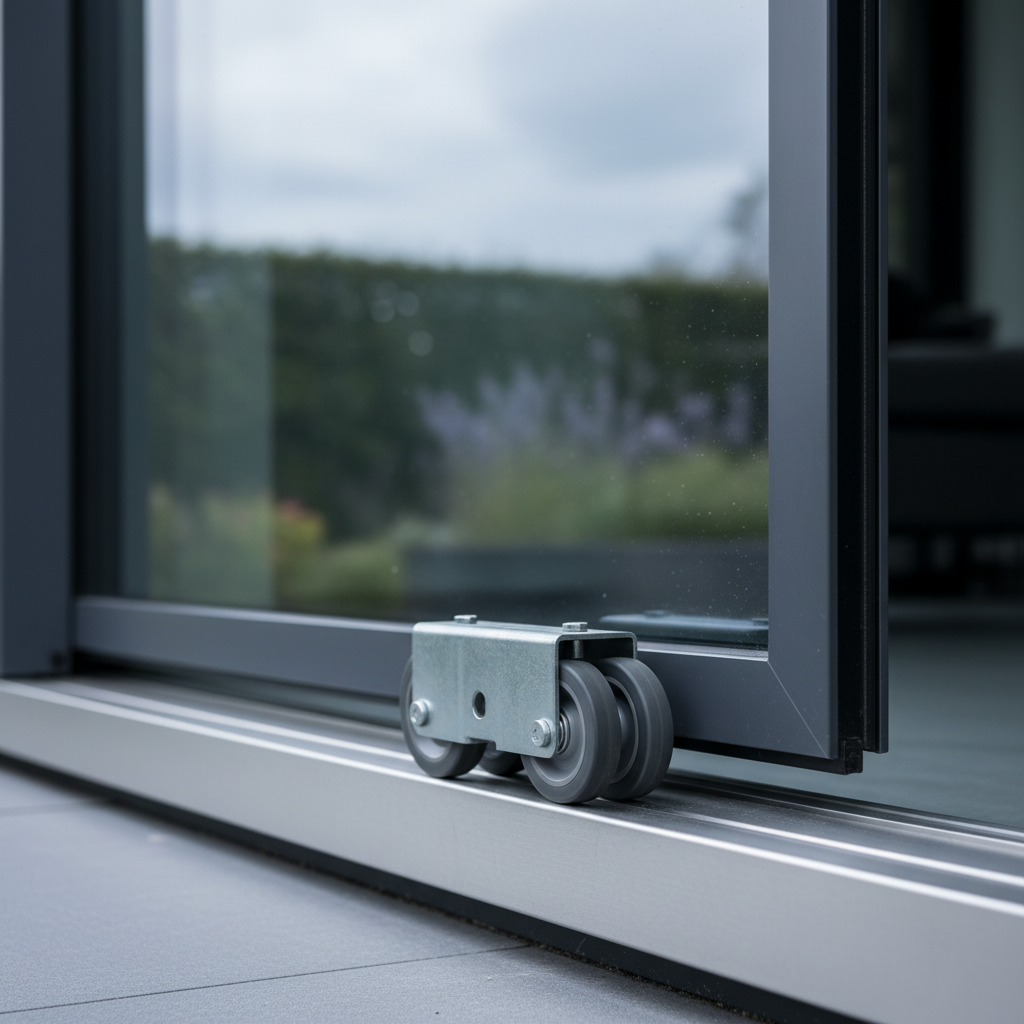
The short answer: If your sliding patio door suddenly feels like you're pushing a loaded refrigerator, the door hasn't gained weight. The rollers underneath it are shot, the aluminum track they ride on is pitted, or both. A proper patio door track repair — new tandem rollers plus a stainless steel cap track over the old aluminum — fixes the problem for $150–$300 and lasts a decade or more.
That "heavy door" feeling isn't your imagination
Here's the thing nobody tells you when you move into a Toronto home with sliding patio doors: the day will come when opening that door becomes a full-body workout. You'll try WD-40. You'll vacuum the track. You'll convince yourself the door has somehow swollen. And none of it will make a lasting difference.
I've been replacing windows and doors across the GTA for years, and I can tell you that roughly seven out of ten "heavy patio door" calls we get come down to the same two-part problem: worn-out rollers and a chewed-up track. The door itself is fine. The hardware underneath it is not.
Let's walk through why this happens, what your repair options actually look like, and why a stainless steel cap track is the smartest fix most homeowners have never heard of.
What's actually going on under your patio door
A sliding patio door is deceptively simple. The door panel — usually 70 to 100 pounds of glass and vinyl or aluminum — sits on two roller assemblies, one at each end of the bottom rail. Those rollers ride along a raised aluminum track that's part of the door sill.
When everything is working, the rollers carry the door's weight and the track provides a smooth runway. You get that satisfying one-finger glide.
When things go wrong, and they always do eventually, one of two things has failed:
The rollers
Patio door rollers take a beating. Every time you open and close the door, those small wheels absorb the full weight of the panel. Over thousands of cycles, the bearings wear out, the wheels flatten or crack, and the roller housings corrode.
"Most patio door rollers are designed to last 10–15 years, but salt exposure, dirt infiltration, and lack of maintenance can cut that lifespan in half."
In Toronto specifically, we see roller failure accelerate because of road salt tracked onto balconies and patios during winter. Salt gets into the track, the rollers pick it up, and corrosion does the rest.
The track
This is the part most homeowners miss entirely. Even if you replace the rollers, a damaged track will chew through the new ones in a fraction of their normal lifespan.
Standard patio door tracks are extruded aluminum. Aluminum is lightweight and cheap to manufacture, which is why builders use it. But it's also soft. Over years of roller contact, grit accumulation, and salt exposure, the track surface becomes pitted — covered in tiny craters and rough spots that create drag.
Run your finger along the track of a 15-year-old patio door. If it feels rough, like fine sandpaper, that's pitting. And that pitting is exactly why your "new" rollers won't stay smooth for long if you don't address the track at the same time.
The three types of patio door track repair
Not all track repairs are equal. Here's what you're actually choosing between:
1. Clean and lubricate (temporary fix)
This is what most people try first. Vacuum out the debris, scrub the track with a stiff brush, and apply silicone-based lubricant (never WD-40 — it attracts dust and gums up).
When it works: If the track is in decent shape and the rollers are still functional, cleaning and lubrication can buy you another year or two.
When it doesn't: If the aluminum is visibly pitted, scratched, or bent, no amount of silicone spray is going to smooth out the surface. You're treating symptoms, not the disease.
2. Full track replacement (the nuclear option)
This means removing the entire door sill and replacing the track assembly. It's the most thorough approach but also the most expensive and disruptive.
When it makes sense: If the track is severely bent, cracked, or the sill itself is rotting (common with older wooden sills in Toronto's climate).
When it's overkill: If the track is structurally sound but just has surface damage from pitting and corrosion. In that case, you're tearing out perfectly good infrastructure to fix a surface problem.
3. Stainless steel cap track (the smart fix)
This is the approach I recommend for the vast majority of patio door track repair jobs we do in Toronto. A stainless steel cap track is exactly what it sounds like: a thin, precision-formed strip of stainless steel that fits directly over your existing aluminum track.
"Think of a stainless steel cap track like putting a new road surface over a potholed street. The road underneath is structurally fine — it just needs a smooth surface on top."
The cap track — available in standard 48-inch and 96-inch lengths from manufacturers like Prime-Line — snaps over the old aluminum and bonds in place with a bead of silicone adhesive. Once installed, the rollers ride on stainless steel instead of pitted aluminum.
Why stainless steel matters:
- Corrosion resistance. Stainless steel laughs at the salt, moisture, and temperature swings that destroy aluminum tracks. In Toronto's freeze-thaw climate, this is a significant advantage.
- Surface hardness. Stainless is considerably harder than aluminum, so it resists the pitting and wear that caused the original problem.
- Smooth gliding even if the original aluminum track is pitted. The cap covers the damage and provides a factory-fresh surface without tearing anything out.
- Cost. A cap track plus installation runs a fraction of what full sill replacement costs.
Roller types: what you need to know
When you're doing a patio door track repair, replacing just the track without addressing the rollers (or vice versa) is like putting new tires on a car with a bent axle. You need to evaluate both.
Here's a quick primer on the roller types you'll encounter:
Single wheel rollers
The simplest design. One wheel per assembly. Found on older, lighter doors and many screen doors. They're cheap but not built for heavy glass panels.
Tandem rollers
Two wheels per assembly, mounted in a steel or polymer housing. This is the standard for modern residential patio doors. The dual-wheel design distributes weight more evenly and provides smoother tracking.
"If your door uses single-wheel rollers and it's heavy to move, upgrading to tandem rollers during your patio door track repair can make a dramatic difference — even before you address the track."
Wheel material
- Nylon wheels are quieter, gentler on tracks, and resist corrosion. Best for most residential applications.
- Steel wheels handle heavier loads and last longer in high-traffic commercial settings, but they're noisier and can accelerate track wear if the track surface is already compromised.
- Stainless steel ball-bearing wheels offer the best of both worlds — durability plus corrosion resistance — but come at a premium.
For most Toronto homeowners, tandem rollers with nylon ball-bearing wheels are the sweet spot. They handle the weight of a standard residential patio door with room to spare, they're quiet, and they won't corrode in our salty winters.
What a proper patio door track repair actually involves
Here's what the job looks like when we do it right, from start to finish. This isn't the abbreviated YouTube version — this is the full process for a repair that lasts.
Step 1: Remove the door panel
This is a two-person job, full stop. A standard sliding patio door panel weighs 70 to 100 pounds. Some high-end triple-pane units push 120. You need to lift it up into the head track, swing the bottom out, and set it down without dropping it on anyone's feet or cracking the glass.
The screen door comes out first. Then the operating panel. If there's a fixed panel, it usually stays in place unless the track damage extends under it.
Step 2: Inspect the rollers and track
With the door out, we can see exactly what we're dealing with. Common findings:
- Flat-spotted or cracked roller wheels. The nylon or steel has worn down unevenly, creating a bumpy ride.
- Seized bearings. Dirt and corrosion have locked up the roller's internal bearings. The wheel doesn't spin freely anymore — it drags.
- Pitted or gouged track. The aluminum surface is rough, scratched, or has visible corrosion pits.
- Debris buildup. Years of pet hair, dirt, leaves, and grit packed into the track channel.
Step 3: Clean the track
Before any repair material goes on, the track needs to be surgically clean. We scrape out debris, scrub the surface, and wipe it down with a solvent to remove any grease or residue. If you're bonding a stainless steel cap track, adhesion depends on a clean surface.
Step 4: Install the stainless steel cap track
The cap track gets measured and cut to length. A thin, continuous bead of silicone adhesive goes onto the existing aluminum track. The stainless steel cap snaps over the top and gets seated firmly with a rubber mallet and a wood block to avoid denting the steel.
The silicone needs time to cure — typically 24 hours for full bond strength. We'll usually tell homeowners to keep the door out or avoid using it for that curing period.
Step 5: Replace the rollers
Out with the old, in with the new. The roller assemblies mount into the bottom rail of the door panel with screws. We match the new rollers to the door manufacturer's specs — wheel diameter, housing width, and mounting hole pattern all have to match.
After installation, the height adjustment screws get set so the door sits level in the frame with proper clearance at the top and bottom.
Step 6: Reinstall the door
Panel goes back in, rollers ride onto the fresh cap track, and we adjust until the door glides smoothly, locks properly, and seals against the weatherstripping. A good technician will also check the door's alignment in the frame — if it's racking (sitting at an angle), the rollers need further adjustment.
Step 7: Lubricate and test
A light coat of silicone-based lubricant on the track surface, a few dozen open-close cycles to verify smooth operation, and a final check of the lock and weatherstrip engagement.
What does this cost in Toronto?
Let's talk real numbers, because I know that's what you're actually here for.
| Repair type | Parts cost | Labour cost | Total |
|---|---|---|---|
| Rollers only | $20–$40 | $75–$140 | $95–$170 |
| Rollers + stainless steel cap track | $40–$80 | $100–$200 | $150–$300 |
| Full track/sill replacement | $100–$250 | $200–$400 | $300–$650 |
| Full door replacement | $800–$3,000+ | $200–$500 | $1,000–$3,500+ |
For most situations we see in Toronto, the rollers-plus-cap-track option at $150–$300 is the best value. You get a repair that's functionally as good as a full track replacement at roughly half the cost and a fraction of the disruption.
Compare that to a full sliding patio door replacement, which starts around $1,000 and goes up fast if you're upgrading to energy-efficient glass. A $200 track and roller repair on a door that's otherwise in good shape is an obvious win.
"Replacing a perfectly good patio door because the track is worn is like junking a car because the tires are bald. Fix the contact patch, not the whole machine."
When repair isn't enough
I'd be doing you a disservice if I pretended every patio door can be saved with new rollers and a cap track. Sometimes replacement really is the right call:
- Foggy glass. If you see condensation between the panes, the sealed unit has failed. You can replace just the glass in some cases, but if the door is old enough to need track repair, the frame is probably past its prime too.
- Bent or warped frame. If the frame has racked so badly that no roller adjustment can make the door sit square, it's time for a new unit.
- Drafts and energy loss. Older single-pane or early double-pane patio doors bleed heat. If you're spending money on a repair anyway, it might make more sense to invest in a modern energy-efficient residential window and door replacement.
- Security concerns. Old patio door locks are notoriously easy to defeat. A new door with a multi-point locking system is a meaningful security upgrade.
If you're in a Toronto high-rise, the situation has its own wrinkles. Balcony doors in condos face wind loads, temperature extremes, and building-movement stresses that ground-level doors don't. We've written about the specific challenges of balcony door roller replacement in Scarborough high-rises if that's your situation.
DIY vs. hiring a pro
I'm not going to tell you that patio door track repair is impossible to do yourself. It's not. The parts are available at any hardware store, and there are decent tutorials out there.
But here's what I will tell you, honestly:
The door is the hard part, not the repair. Removing and reinstalling a 70–100 lb glass panel without a helper is genuinely dangerous. And even with a helper, if you don't know the trick of lifting into the head track and swinging the bottom, you can crack the glass, bend the frame, or hurt someone.
If you're comfortable handling the door and you're reasonably handy, the roller swap and cap track installation are straightforward. You'll need:
- A Phillips and flat-head screwdriver
- A rubber mallet
- Silicone adhesive (not caulk — adhesive)
- A hacksaw or tin snips to cut the cap track to length
- A vacuum and cleaning supplies for the track
- Silicone-based lubricant (not WD-40)
- A helper who doesn't mind heavy lifting
Budget about two to three hours for the full job if it's your first time.
If any of that sounds like more than you signed up for, a professional can typically handle the entire repair in under two hours. The labour cost of $100–$200 is genuinely reasonable for the peace of mind that it's done right and nothing got broken in the process.
Maintenance tips to keep your door sliding smooth
Once you've done a patio door track repair — whether DIY or professional — these habits will help you get the full lifespan out of the new hardware:
- Vacuum the track monthly. Hair, dirt, and grit are the enemy. A quick pass with a crevice attachment takes thirty seconds.
- Apply silicone lubricant twice a year. Once in spring, once in fall. Spray it on the track surface and work the door back and forth a few times.
- Keep the track dry. After rain or snow melt, wipe standing water out of the track channel. This is especially important for Toronto's spring thaw season.
- Adjust the rollers annually. The height adjustment screws on the bottom of the door can shift over time. If the door starts to feel draggy or the lock doesn't align, a quarter-turn adjustment usually fixes it.
- Don't slam the door. Sounds obvious, but the impact stress accelerates roller and track wear. Teach the kids, remind the guests.
The bottom line
A heavy sliding patio door is almost never a door problem. It's a roller-and-track problem. And in Toronto's climate — where salt, moisture, and freeze-thaw cycles punish aluminum hardware relentlessly — the solution isn't just replacing rollers. It's giving those rollers a track surface that can handle the conditions.
Stainless steel cap tracks are the most cost-effective way to get there. They install over your existing damaged aluminum, they resist the corrosion that caused the damage in the first place, and they turn a frustrating, stick-and-drag door back into the smooth-gliding entrance it was when it was new.
New rollers plus a cap track. $150–$300. Two hours of work. Ten-plus years of smooth operation. That's hard to argue with.
Tired of wrestling with your patio door? We do roller and track repairs across Toronto and the GTA — typically same-week service. Get a free estimate or call us to talk through your situation. No pressure, no upsell. Just honest advice on whether repair or replacement makes sense for your door.