
Too Long; Didn't Read
Vinegar alone won't cut through heavy hard water deposits on shower glass. Toronto's moderately hard water (120-140 ppm calcium and magnesium) etches mineral scale into glass over time. To actually clean shower glass back to clarity, you need a mild acid like oxalic or sulfamic acid, a non-scratch abrasive, and—critically—a restored hydrophobic coating so the stains don't come back within a week.
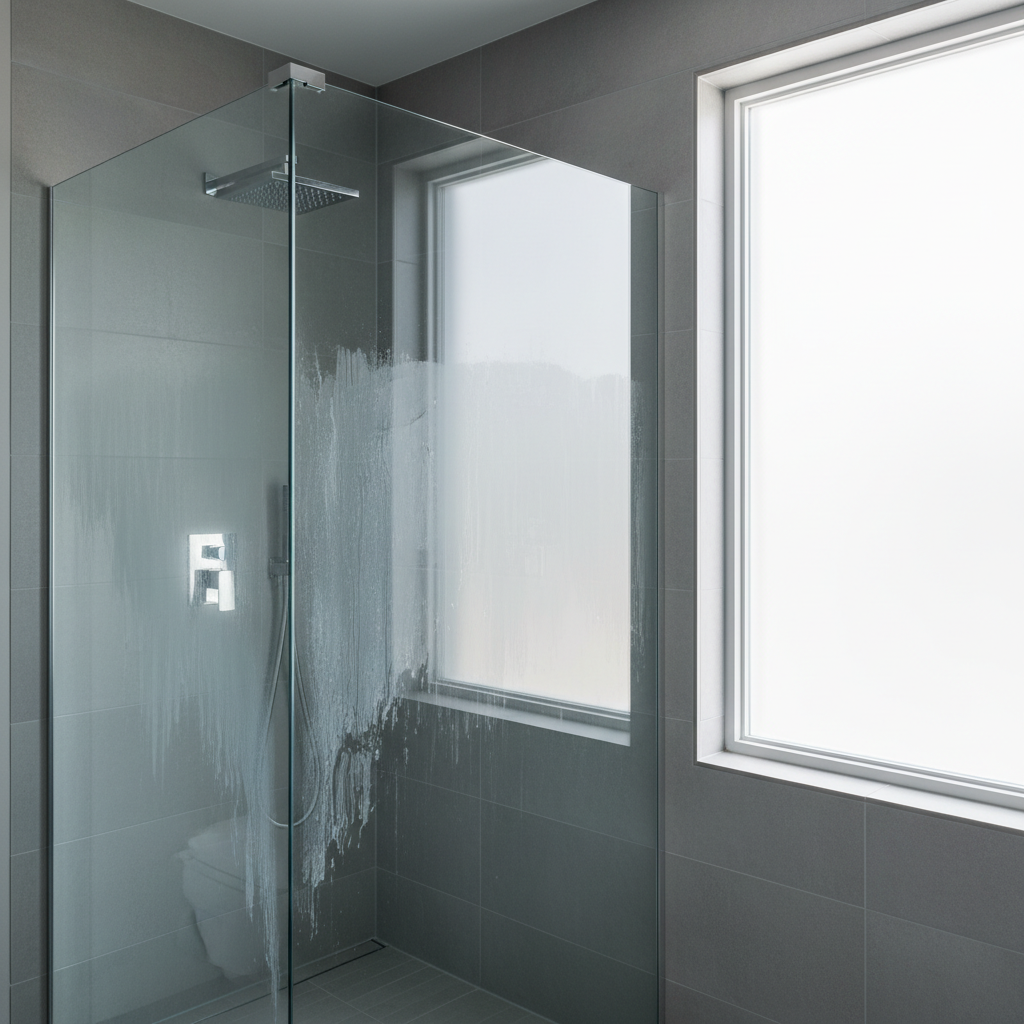
Removing Hard Water Stains from Shower Glass
Answer first: To properly clean shower glass with hard water buildup, skip the vinegar-and-baking-soda routine. Use a mild acid cleaner (oxalic acid like Bar Keepers Friend or a sulfamic acid descaler), a non-scratch scrub pad, and finish by restoring the hydrophobic coating. That last step is what keeps the glass clear for months instead of days. Here is exactly how to do it, what products actually work, and why Toronto's water makes this worse than you think.
You have tried the Pinterest trick. The one with the spray bottle of white vinegar and a cut lemon, maybe some baking soda paste for good measure. You let it sit. You scrubbed. You rinsed. And the shower glass still looks like it's been frosted on purpose.
I know because I have stood in the same bathroom, squinting at the same cloudy glass, wondering if the problem is my technique or the glass itself. After years of installing and replacing shower glass across Toronto and the GTA, I can tell you: the problem is neither. The problem is chemistry, and most cleaning advice on the internet gets the chemistry wrong.
This is the guide I wish someone had handed me before I wasted a bottle and a half of vinegar on a shower enclosure in a Leslieville condo. We are going to talk about what hard water stains actually are, why the popular DIY methods fall short, which mild acids genuinely work, and—the part almost nobody mentions—how to restore the protective coating that keeps the glass from fogging up again within a week.
What Hard Water Stains Actually Are (And Why That Matters)
Let's get specific. When people say "hard water stains," they are usually looking at one of three things:
1. Fresh water spots. These are mineral deposits left behind when water droplets evaporate. They are mostly calcium carbonate (CaCO3) with some magnesium. Wipe them off within a day or two and they come right off with a damp cloth.
2. Accumulated mineral scale. Leave those water spots alone for a few weeks and they start layering on top of each other. The calcium bonds more aggressively to the glass surface. Now you need an acid to dissolve them.
3. Chemical etching. This is the stage nobody warns you about until it is too late. When mineral deposits sit on glass long enough—months, sometimes just weeks in hard water areas—they cause a chemical reaction with the silica in the glass itself. The surface becomes permanently pitted and cloudy. No cleaner on earth will fix etched glass. You either polish it with cerium oxide compound or replace the panel.
Quotable nugget: "Hard water stains are not just sitting on your glass. Given enough time, they are eating into it."
Toronto's municipal water sits at roughly 120 to 140 parts per million of dissolved calcium and magnesium. The City of Toronto classifies this as "moderately hard." That sounds harmless. It is not. At 120 ppm, you get visible spotting within two to three days of a shower if nobody squeegees the glass. At 140 ppm, the white crust starts forming at the bottom of the panel—where water pools against the sweep seal—within a couple of weeks.
If you live in parts of the GTA that pull from different water sources—Oakville, Mississauga, Brampton—hardness can run even higher. I have measured panels pulled from Oakville bathroom renos where the scale was thick enough to feel with a fingernail. That is not a stain anymore. That is a mineral deposit fused to the glass.
Why Vinegar Is Not Enough
I am not here to trash vinegar. It is a legitimate acid. Acetic acid at roughly 5% concentration will dissolve light calcium carbonate deposits. For fresh water spots on glass, it works fine.
Here is where it falls apart:
It is too weak for accumulated scale. By the time most people decide to "really clean" their shower glass, the deposits have been building for months. The calcium has bonded. A 5% acid solution sitting on the surface for 15 minutes is not going to break that bond. You would need to reapply it dozens of times, and even then you are only dissolving the outer layer.
It does nothing to silica deposits. Hard water is not just calcium and magnesium. Dissolved silica also precipitates out and bonds to glass. Acetic acid does not touch silica. You need a different chemistry entirely.
It can damage surrounding materials. Vinegar eats into grout, corrodes chrome and brass fixtures if left on too long, and will destroy natural stone tile (marble, limestone, travertine) on contact. So you are using a weak acid that barely works on the glass while it actively damages everything around the glass.
The baking soda "boost" is a myth. When you mix baking soda (a base) with vinegar (an acid), they neutralize each other. That satisfying fizz is carbon dioxide gas being released. What you are left with is mostly sodium acetate and water—which has almost no cleaning power at all. You would get better results using the vinegar and the baking soda separately.
Quotable nugget: "Mixing vinegar and baking soda gives you a fun science fair volcano and a mediocre cleaner. Pick one or the other, not both."
The Mild Acids That Actually Work
If vinegar is a butter knife, these are the right tools for the job. All of them are available at hardware stores or online, and none of them require a chemistry degree to use safely.
Oxalic Acid (Bar Keepers Friend)
This is my go-to recommendation for most homeowners. Bar Keepers Friend powder contains oxalic acid and a fine mineral abrasive. The oxalic acid chemically dissolves calcium, magnesium, and rust deposits. The abrasive provides just enough mechanical action to break the bond between the scale and the glass without scratching tempered glass.
How to use it:
- Wet the glass with warm water.
- Sprinkle Bar Keepers Friend onto a damp non-scratch sponge (the soft side, not the green scrubby side).
- Work in small circular motions, one section at a time. Keep the surface wet.
- Rinse thoroughly with clean water. This step is critical—oxalic acid residue dries white and looks identical to hard water stains. If you think the product did not work, you probably did not rinse enough.
- Dry with a clean microfiber cloth.
Safety notes: Wear rubber gloves. Oxalic acid stings on cuts and dry skin. Keep the bathroom fan on or crack a window—the powder can irritate your lungs in a small enclosed shower stall. And never, ever mix it with bleach. Chlorine gas is no joke.
Sulfamic Acid (Commercial Descalers)
For heavier deposits, sulfamic acid is more aggressive than oxalic acid while still being safe on glass. You will find it in commercial bathroom descalers—check the active ingredient list. CLR (Calcium, Lime & Rust Remover) and similar products often use sulfamic or lactic acid as their working ingredient.
Sulfamic acid has a practical advantage: unlike hydrochloric acid (which some industrial descalers use), it will not produce chlorine gas if someone accidentally mixes it with a bleach-based cleaner. That makes it a safer choice for home use.
How to use it:
- Spray or apply the descaler directly to dry glass. Dry glass lets the acid concentrate on the mineral deposits instead of being diluted by water.
- Let it sit for 5 to 10 minutes. Do not let it dry on the glass.
- Scrub with a non-scratch pad.
- Rinse thoroughly.
- Repeat on stubborn areas.
Phosphoric Acid (Use With Caution)
Some professional glass restorers use phosphoric acid for severe cases. I am mentioning it for completeness, but I want to be direct: phosphoric acid can etch glass if used improperly. If you are dealing with deposits bad enough to warrant phosphoric acid, you are probably better off calling a professional glass restoration service or considering residential glass replacement altogether.
The Step Everyone Skips: Restoring the Hydrophobic Coating
Here is the thing that separates a shower that stays clean for six months from one that fogs up again by next Tuesday.
Most quality shower glass panels ship from the factory with a hydrophobic coating. You may have heard brand names like EnduroShield, ClearShield, or Diamon-Fusion. The coating is invisible—only two molecules thick—and it does one simple job: it makes water bead up and roll off the glass instead of sitting there and evaporating into mineral deposits.
The problem: that factory coating wears off. Depending on water hardness, cleaning products used, and how often the shower gets used, the original coating lasts anywhere from one to three years. After that, you are essentially showering on raw glass, and raw glass is a magnet for mineral deposits.
Quotable nugget: "Cleaning hard water stains without restoring the hydrophobic coating is like washing your car and parking it under a tree full of pigeons. You have solved the problem for about eight hours."
How to restore the coating:
After you have deep-cleaned the glass with one of the acid methods above, and after the glass is completely clean and dry:
Buy a hydrophobic glass treatment kit. EnduroShield makes a DIY kit available at Home Depot and online. It comes with the coating solution, an applicator cloth, and a maintenance cleaner. There are other brands too—Rain-X for glass works in a pinch, though it does not last as long.
Apply in a well-ventilated area. Follow the product instructions exactly. Generally you are wiping the solution onto clean, dry glass in overlapping strokes, then buffing off the excess with a clean microfiber cloth after a set curing time.
Let it cure. Most coatings need 24 hours before the shower gets used again. EnduroShield specifically asks for a 24-hour cure time. Do not rush this. An improperly cured coating will fail within weeks.
Maintain it. A reapplied DIY coating typically lasts 1 to 3 years, depending on use. EnduroShield claims up to 3 years with their home kit and offers a 10-year warranty on professional applications. Even with the coating, squeegee after showers when you can. The coating reduces buildup—it does not make you immune to physics.
The Nuclear Option: Cerium Oxide Polishing
If your shower glass has progressed to chemical etching—that cloudy, almost frosted look that does not come off no matter what acid you throw at it—you have one option before replacement: cerium oxide polishing.
Cerium oxide is a rare earth compound that works through a combination of chemical reaction and mechanical abrasion. Professional glass restorers mix it into a slurry and apply it with a rotary polishing tool fitted with a felt pad. The heat and friction trigger a chemical reaction between the cerium oxide and the glass surface, essentially smoothing out the microscopic pits caused by mineral etching.
Can you do this yourself? Technically, yes. Cerium oxide powder is available online, and you can use a drill with a felt polishing attachment. Realistically, polishing glass evenly without creating distortion takes practice. If this is a frameless shower enclosure with tempered glass, a botched polishing job is very visible—every ripple and uneven spot will catch the light.
For most people, this is where it makes sense to call in a professional. And if the etching is severe enough, replacement is often more cost-effective than restoration. We have helped plenty of Toronto homeowners through that decision—if your shower glass has reached the point where you are Googling "cerium oxide polishing," you might want to take a look at what's involved in custom shower glass replacement to compare your options.
A Practical Weekly and Monthly Routine
Knowing how to remove hard water stains is useful. Preventing them from forming in the first place is better. Here is the routine I recommend to every client after a shower glass installation:
After Every Shower (30 Seconds)
Run a squeegee down the glass from top to bottom. That is it. This single habit prevents 80% of hard water buildup. Keep a squeegee hanging inside the shower so it is always within reach.
Weekly (5 Minutes)
Spray the glass with a pH-neutral glass cleaner or a mix of water and a few drops of dish soap. Wipe with a microfiber cloth. This handles soap scum and any water spots that survived the squeegee.
Do not use abrasive cleaners for weekly maintenance. Do not use vinegar weekly either—repeated acid exposure wears down hydrophobic coatings faster.
Every 3-6 Months (30 Minutes)
This is your deep clean. Use one of the mild acid methods described above. After cleaning, inspect the water beading behavior on the glass—if water sheets instead of beading, the hydrophobic coating has worn off and needs reapplication.
In Toronto's moderately hard water, this schedule keeps shower glass looking new for years. If you are in a harder water area or your home does not have a water softener, lean toward the 3-month end of that range.
When to Stop Cleaning and Start Replacing
I install glass for a living, so I will be honest about the conflict of interest here. But I have also told plenty of customers that their glass is fine and just needs a proper cleaning. Here is where the honest line sits:
Keep cleaning if:
- The stains come off with an acid cleaner, even if it takes some effort
- The glass looks clear and smooth after cleaning
- Water beads properly once you restore the coating
Consider replacement if:
- The glass has a permanent cloudy or rough texture that no acid removes
- You can feel the etching with your fingertip—tiny pits and rough patches
- The glass is older than 15-20 years and has visible scratches along with the etching
- The seal hardware is corroding and the hinges are stiff (at that point you are replacing the whole enclosure anyway)
Old shower glass is not dangerous—tempered glass does not become structurally weaker from hard water etching. But it does become permanently ugly, and no amount of cleaning will bring back clarity once the surface is chemically pitted.
A Quick Note About Water Softeners
If you are tired of fighting hard water stains on every glass surface in your home—shower, windows, glass cooktop—a whole-home water softener is the upstream fix. It removes calcium and magnesium ions before the water reaches your fixtures. Prices in the Toronto area typically run $1,500 to $3,000 installed for a quality unit.
It is a real investment, but it pays dividends beyond clean shower glass: less scale in your pipes, longer appliance life, better soap lathering, and softer laundry. If you are building or renovating, it is worth putting on the list.
The Bottom Line
Most people try to clean shower glass with the wrong products, get frustrated when it does not work, and either give up or assume the glass is ruined. The actual process is straightforward once you understand the chemistry:
- Use a real acid, not vinegar. Oxalic acid (Bar Keepers Friend) for moderate buildup, sulfamic acid descaler for heavy deposits.
- Rinse obsessively. Acid residue looks like the stains you just removed.
- Restore the hydrophobic coating. This is the step that keeps the glass clean long-term. Without it, you are back to square one within weeks.
- Squeegee after every shower. Thirty seconds of prevention beats thirty minutes of scrubbing.
If you are past the point of cleaning—if the glass is etched, cloudy, and rough to the touch—polishing or replacement are your remaining options. No shame in that. Toronto's water is hard enough that even well-maintained glass eventually needs professional attention.
Need help with your shower glass? Whether it is a deep restoration, a hydrophobic coating reapplication, or a full panel replacement, we work with Toronto homeowners every week on exactly this. Take a look at our residential glass services or give us a call to talk through your options. No pressure—sometimes the answer really is just Bar Keepers Friend and a squeegee.